The blinking vertical cursor on a blank white screen is one of the most intimidating sights in student life. Whether you are dealing with a freshman composition essay or a capstone research project, starting from scratch often leads to severe procrastination. Most students sit waiting for a sudden wave of inspiration to hit them, treating writing like an artistic mystery. In reality, successful academic writing is not a matter of luck; it is an engineering problem. When you treat a major paper like an architectural blueprint rather than a creative freestyle, the stress disappears. By leveraging modern digital frameworks, you can construct a foolproof skeleton for your paper long before you attempt to write a single full sentence.
The fundamental breakdown occurs because students confuse the act of researching with the act of structuring. When you try to find sources, organize your arguments, and craft perfect prose all at the exact same time, your brain experiences cognitive overload. To streamline this process, many digital-native students experiment with automated tools like an essay typer free to quickly generate initial structural concepts and overcome writer’s block. Relying on premium data compilation and research generation systems from myassignmenthelp allows you to quickly sort through massive academic databases, build stable thematic clusters, and map out your core layout without wasting hours staring at an empty page. Once you have a structural anchor in place, filling in the blanks becomes a mechanical, stress-free task.
The Core Blueprint: Why Architecture Trumps Inspiration
Before diving into specific software tools, it is crucial to understand the structural physics of a high-scoring academic paper. Every strong research paper relies on a clear, logical progression of ideas. If your framework is weak, even the most advanced vocabulary will not save your grade. An academic layout must establish a clear thesis, present evidence that directly supports that thesis, and address counterarguments without losing focus.
Most structural failures happen because students write linearly—starting at the introduction and hoping they figure out the conclusion by page ten. This approach usually leads to repetitive paragraphs, weak transitions, and off-topic tangents. Instead, top-tier students use modern digital outlining frameworks to build their papers from the inside out. They start by securing their main arguments, mapping out the evidence, and only writing the introduction and conclusion at the very end of their workflow.
Framework 1: The Markdown Hierarchy (The Dev-Style Setup)
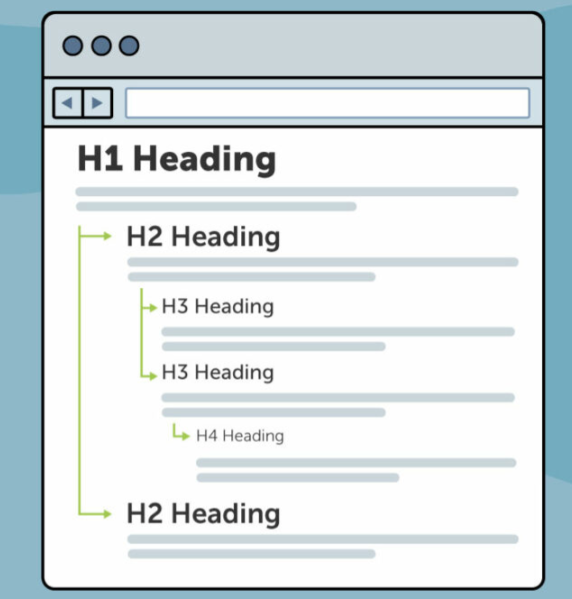
One of the most effective tech-backed methods for structuring complex assignments is borrowing a technique from software developers: writing in Markdown. Markdown is a lightweight formatting language that uses simple symbols (like hashtags) to create instant visual hierarchies. Instead of getting distracted by changing fonts, adjusting margins, or fixing bullet points in a traditional word processor, Markdown forces you to focus entirely on the logical relationships between your ideas.
Using dedicated applications like Obsidian, Logseq, or even simple plain-text editors, you can map out your assignment using a strict heading framework:
- H1 (#): The Core Thesis Statement (The central argument of your entire paper)
- H2 (##): Major Supporting Pillars (The foundational arguments that prove your thesis)
- H3 (###): Granular Evidence and Data Points (The specific quotes, statistics, and case studies)
The true power of this digital framework lies in its absolute simplicity. By keeping your workspace entirely plain text, you prevent your mind from drifting into stylistic formatting loops. You can visually track whether an argument is robust enough to stand on its own or if a specific section lacks supporting data. If a particular H2 section only contains one minor H3 bullet point, you instantly know your argument is thin and requires deeper academic investigation.
Framework 2: The Digital Kanban System (Modular Drafting)
If linear text outlines still feel too restrictive or overwhelming, you can pivot to a visual project management framework using Kanban systems like Trello or Notion boards. Originally designed to help engineering teams track software deployment pipelines, Kanban boards divide massive projects into highly visual, moveable cards. This framework completely reframes the writing process by turning a massive 3,000-word assignment into a series of small, manageable micro-tasks.
To build an academic Kanban environment, create columns that mimic the lifecycle of your research:
- Thesis Hook: The main angle or research question.
- To Research: Specific concepts or claims that still need factual backing or data citations.
- Evidence Secured: Verified quotes, data points, and primary sources ready for implementation.
- Drafting Phase: Sections currently being expanded into formal prose.
- Polished Content: Finished modules that are fully cited and proofread.
Every single paragraph or argument becomes an independent digital card. If you find a brilliant quote regarding economic policy while browsing an online database, you drop it into a card under the “Evidence Secured” column. When you are ready to write, you simply drag that card into the “Drafting Phase” and expand it. This modular framework allows you to work on whatever section matches your current energy levels. If you lack the mental focus to draft a complex theoretical section on a Tuesday evening, you can easily spend twenty minutes organizing citations or formatting data cards instead.
Framework 3: Mind Mapping and Algorithmic Linking
For papers that require connecting multiple cross-disciplinary concepts, linear outlines often fail to capture the complex web of information. This is particularly true for students managing advanced applications or milestone projects, such as preparing an intricate business profile or utilizing an elite mba admission essay writing service to organize highly specific leadership narratives. In these scenarios, mapping your ideas non-linearly using mind-mapping software like XMind or Miro provides a significant competitive advantage.
The Spatial Connection Matrix
A mind map allows you to start with your central thesis directly in the middle of a massive digital canvas. From there, you branch outward into primary thematic areas, which then split into individual paragraphs and evidentiary nodes. This method mirrors the natural way the human brain processes complex data—through association rather than rigid, top-down lists.
| Outlining Method | Best Used For | Cognitive Benefit | Primary Software Tools |
| Markdown Hierarchy | Highly structured, linear argumentative essays | Forces logical progression and prevents formatting distractions | Obsidian, Logseq, Typora |
| Kanban System | Long-form research projects and team assignments | Breaks massive deadlines down into visual, modular micro-tasks | Trello, Notion, Asana |
| Digital Mind Mapping | Exploratory research, literature reviews, synthesis | Reveals hidden connections between complex, distinct data sets | XMind, Miro, MindMeister |
By using this visual approach, you can easily spot gaps in your logic. If one branch of your mind map is packed with dozens of vibrant sub-nodes, while another branch looks bare, the system gives you an immediate visual alert that your paper is structurally unbalanced. You can instantly drag, drop, and reconnect nodes across the canvas until the intellectual architecture of your argument is entirely stable.
Managing Cognitive Load: The Task Allocation Framework
To execute a high-ranking academic paper without burning out, you must understand how to budget your limited cognitive energy. Writing is not a single task; it is a collection of distinct mental processes. High-performing students optimize their output by separating high-complexity analytical tasks from low-complexity systemic tasks.
When you categorize your workload using an explicit data framework, you prevent the mental fatigue that leads to empty screen paralysis. The matrix below outlines how to divide your academic workflow efficiently:
| Workflow Priority | Task Type | Cognitive Demand | Ideal Tech-Driven Solution |
| Tier 1: Core Architecture | Thesis formulation, structural outlining, argument linking | High Analytical Focus | Plain-text Markdown environments, spatial mind maps |
| Tier 2: Data Synthesis | Extracting primary quotes, compiling statistics, cross-referencing sources | High Information Gathering | Digital databases, academic citation managers (Zotero) |
| Tier 3: Execution & Expansion | Turning structured bullet points into formal prose paragraphs | Moderate Creative Flow | Focus-optimized distraction-free writing applications |
| Tier 4: Systemic Refinement | Formatting bibliographies, auditing proofreading, checking double spaces | Low Operational Focus | Automated text analysis engines, digital style guides |
By honoring this hierarchy, you ensure that you never waste your peak brainpower on simple formatting issues. You protect your creative energy for the core arguments that actually drive your thesis forward and capture top grades.
Deep Dive: The Anatomy of a High-Authority Paragraph
Once your digital outline is complete, the final step is translating your nodes and bullet points into high-authority text blocks. A common trap for high school seniors and college undergraduates is writing overly conversational paragraphs that lack academic weight. To ensure your text flows naturally while commanding authority, every single body paragraph should adhere to a strict structural ecosystem known as the MEAL Framework:
- M – Main Idea: The very first sentence must state the specific sub-argument of the paragraph. This acts as a mini-thesis for that section.
- E – Evidence: Introduce the concrete data point, historical fact, or direct academic quote that validates your main idea.
- A – Analysis: Explain why the evidence proves your point. This is where you demonstrate critical thinking instead of just repeating facts.
- L – Link: Conclude the paragraph by linking the current argument back to your primary thesis statement or transitioning smoothly into the next heading.
When your paragraphs are engineered using this modular sequence, your writing gains an unstoppable sense of momentum. The reader—and Google’s semantic indexing algorithms—can effortlessly trace your line of reasoning from the introduction to the final sentence.
Putting It Into Practice: The 3-Step Execution Sequence
Once you choose the tech framework that matches your personal learning style, executing the actual outline requires a systematic, step-by-step approach to guarantee your content ranks well and flows naturally.
1.The Data Dump Phase:Time investment: 1-2 hours.
Before worrying about perfect organization, create a single document or digital canvas and dump every relevant quote, raw statistic, and personal insight you find during your research phase. Do not edit yourself; focus purely on comprehensive collection.
2.The Structural Filter:Time investment: 1 hour.
Review your data dump and group related points into distinct thematic categories using your chosen framework (Markdown headings or Kanban cards). Delete any pieces of information that do not directly prove or enrich your central thesis statement.
3.The Connective Tissue Pass:Time investment: 45 minutes.
Write out the brief transitional sentences that will link your main headings together. By establishing how you will transition from one argument to the next before writing the actual paragraphs, you guarantee your final draft maintains an impeccable narrative flow.
The Ultimate Payoff: Writing with Absolute Confidence
Defeating the blank page has nothing to do with waiting for a sudden spark of genius. It is about setting up a reliable, digital environment that handles the heavy lifting of organization before you ever begin crafting sentences. When you split your assignment into separate stages—focusing entirely on architecture first and creative execution second—writer’s block completely disappears.
By implementing these tech frameworks, you shift your status from an anxious student staring at a blinking cursor to a confident structural engineer assembling a high-performance academic paper. Choose a framework, configure your digital workspace, map out your data matrices, and build your path to top-tier grades.
Frequently Asked Questions
FAQ 1: What is the best digital framework for a student who prefers visual learning?
The digital Kanban system is ideal. It breaks a massive writing project into moveable, visual task cards, allowing you to track your research progress and draft paragraphs in flexible, modular blocks rather than a strict linear line.
FAQ 2: How does writing in Markdown help prevent writer’s block?
Markdown uses simple text symbols to build instant visual hierarchies. By working entirely in a plain-text environment, you remove the distraction of adjusting fonts, margins, or text styles, forcing your brain to focus purely on the logical flow of your arguments.
FAQ 3: Should I write the introduction of my research paper first?
No. Writing linearly often causes repetitive ideas. It is far more efficient to build the core structural arguments and map out your evidence first. Once your paper’s framework is solid, drafting the introduction and conclusion becomes much easier.
FAQ 4: How do mind maps improve complex cross-disciplinary essays?
Mind maps layout your central thesis non-linearly on a large digital canvas. This spatial organization mirrors how the brain naturally connects ideas, helping you spot logical gaps and discover hidden thematic relationships between different subjects.
About The Author
Ruby Walker is an experienced educator and content specialist at myassignmenthelp, where she designs comprehensive learning frameworks and academic strategies. She focuses on translating complex educational methodologies into practical, student-friendly digital resources that empower learners worldwide to optimize their academic workflows.